

Discover why the dry season is the ideal time to explore Darwin and Kakadu, from abundant wildlife and ancient Aboriginal culture to spectacular landscapes and unforgettable Top End adventures.
Australia’s Top End is unlike anywhere else in the country. Here, ancient sandstone escarpments rise above vast floodplains alive with wildlife, waterfalls cascade into crystal-clear swimming holes, and the world’s oldest living culture continues to shape the landscape through stories, traditions and a deep connection to Country.
While Darwin and Kakadu National Park offer remarkable experiences year-round, the dry season, from May to October, is widely considered the ideal time to visit. Cooler temperatures, lower humidity and improved access to key attractions make it easier to explore everything the region has to offer.
Whether you’re cruising Yellow Water Billabong, discovering ancient rock art at Ubirr, or watching the sun set over Darwin Harbour, the dry season showcases Australia’s Top End at its very best.
When Is the Dry Season in Darwin and Kakadu?
Unlike many parts of Australia, the Top End has two distinct seasons rather than four: the dry season (May to October) and the wet season (November to April).
For many travellers, the dry season is the ideal time to visit. With lower humidity, sunny days and temperatures typically ranging from the mid-20s to low-30s°C, conditions are perfect for exploring Kakadu’s iconic landscapes, Aboriginal cultural sites and outdoor attractions. It’s also when many walking trails, lookouts and roads are more easily accessible, allowing you to experience more of the region.
Enjoy Comfortable Weather for Exploring
One of the biggest advantages of travelling during the dry season is simply spending more time outdoors.
Rather than planning around tropical downpours or high humidity, visitors can comfortably explore walking trails, scenic lookouts and ancient rock art sites throughout the day. Whether you’re wandering through Darwin’s waterfront precinct, watching the sunset over Mindil Beach or climbing to panoramic viewpoints in Kakadu, the dry season offers consistently pleasant conditions for sightseeing.
Experience Kakadu When It’s Most Accessible
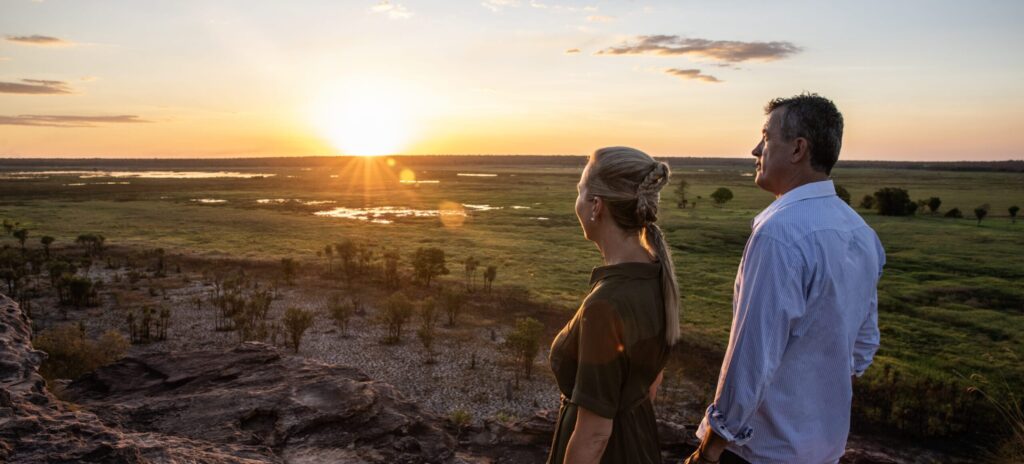
Covering almost 20,000 square kilometres, Kakadu National Park is Australia’s largest national park and one of its most extraordinary natural and cultural landscapes. During the dry season, as floodwaters recede, roads reopen and walking trails become more accessible, making it easier to explore this remarkable destination and reach many of Kakadu’s iconic attractions.
Ubirr
One of Kakadu’s most famous cultural sites, Ubirr is renowned for its extraordinary Aboriginal rock art galleries and sweeping views across the Nadab floodplains. Visiting at sunset is a highlight, as the escarpment glows in warm afternoon light.
The Kakadu & Arnhem Land Explorer tour includes a visit to Ubirr, where you’ll gain a deeper appreciation of the region’s rich Aboriginal heritage while experiencing one of Kakadu’s most iconic landscapes.
Burrungkuy (Nourlangie)
Another significant rock art site, Burrungkuy (Nourlangie), showcases thousands of years of Aboriginal history through ancient paintings that continue to hold deep cultural significance today. Guided experiences provide valuable insight into the stories and traditions connected to Country.
Jim Jim Falls and Twin Falls
Depending on seasonal conditions, some of Kakadu’s spectacular waterfalls and swimming areas reopen during the dry season as access roads become available. While water volumes are lower than during the wet season, visitors are rewarded with easier access and the opportunity to appreciate the dramatic sandstone landscapes up close.
If you’re looking to experience Kakadu’s highlights in one unforgettable journey, the Kakadu National Park Explorer tour brings together many of the region’s most iconic sights.
See Incredible Wildlife
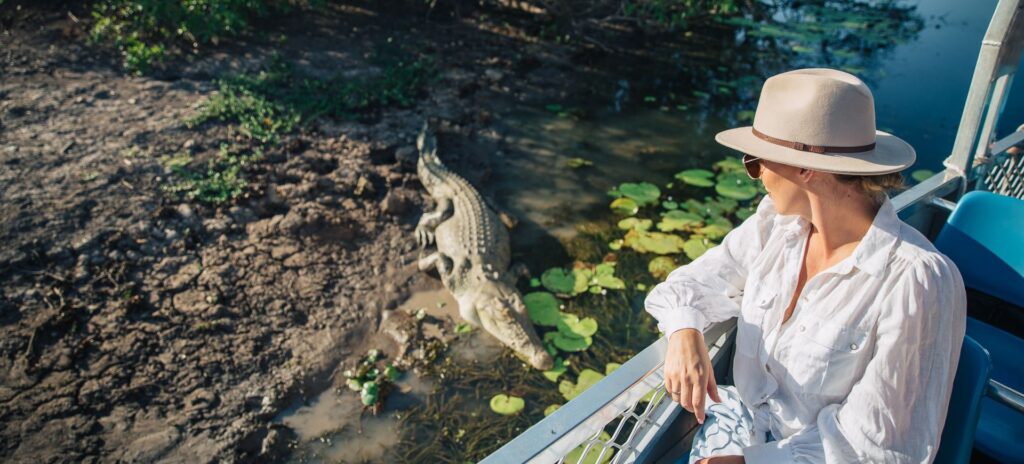
The dry season is one of the best times to experience Kakadu’s remarkable wildlife. As floodwaters recede, birds and animals gather around permanent wetlands, creating excellent opportunities for wildlife spotting.
One of the best ways to experience Kakadu’s wildlife is aboard a Yellow Water Billabong cruise, where you may see:
- Saltwater crocodiles
- Jabirus
- Magpie geese
- Sea eagles
- Egrets and herons
- Buffalo and wild horses along the shoreline
Early mornings and late afternoons are particularly rewarding, when wildlife is most active and the soft light creates unforgettable photography opportunities.
Discover the World’s Oldest Living Culture
Kakadu is jointly managed by the Bininj/Mungguy Traditional Owners and Parks Australia, making it one of Australia’s most significant cultural landscapes.
The dry season is an excellent time to experience Aboriginal culture through guided walks, storytelling, rock art sites and cultural centres.
Learning about the deep connection between people and Country adds another dimension to every waterfall, escarpment and wetland you encounter, transforming a scenic journey into a meaningful cultural experience.
Experience Darwin at Its Best

During the dry season, Darwin comes alive with vibrant markets, waterfront dining and spectacular tropical sunsets. Warm, sunny evenings make it the perfect place to relax before or after exploring Kakadu. Some of the city’s seasonal highlights include:
- Mindil Beach Sunset Market, where you’ll find international street food, local arts and crafts, and live entertainment.
- Sunset cruises on Darwin Harbour, offering a memorable way to experience the city’s famous tropical sunsets.
- Waterfront restaurants overlooking the Timor Sea, perfect for dining with a view.
- Outdoor festivals and cultural events, celebrating the unique lifestyle and culture of Australia’s Top End.
To discover more of the city’s history, culture and iconic sights, explore Darwin or join AAT Kings Darwin City Sights day tour for an insightful introduction to the Northern Territory’s tropical capital.
Travel Through the Top End with AAT Kings
Exploring the Top End with AAT Kings means discovering its spectacular landscapes, rich Aboriginal culture and remarkable wildlife alongside knowledgeable Travel Directors and Driver Guides. Whether you’re interested in cruising Kakadu’s wetlands, experiencing ancient rock art, or venturing beyond to Katherine, Litchfield National Park and the Red Centre, there’s a range of Top End & Northern Territory guided holidays designed to help you experience the very best of the region at a comfortable pace.
Frequently Asked Questions
What months are the dry season in Darwin?
The dry season generally runs from May to October, bringing lower humidity, sunny days and ideal conditions for exploring the Top End.
Is the dry season a good time to visit Kakadu?
The ideal time to visit Kakadu depends on the experience you’re looking for. The dry season offers cooler temperatures, easier access to major attractions and excellent wildlife viewing. During the wet season, the landscape transforms with lush greenery, flowing waterfalls and dramatic storms, although some roads and attractions may be inaccessible.
Can you swim in Kakadu during the dry season?
Some designated swimming areas reopen during the dry season once they have been assessed as safe. Always follow local safety advice, as conditions vary throughout the year.
Is Darwin worth visiting in the dry season?
Absolutely. The dry season is when Darwin is at its liveliest, with outdoor markets, festivals, harbour cruises and beautiful sunsets creating a vibrant atmosphere.