

Few animals capture the spirit of Australia quite like the kangaroo.
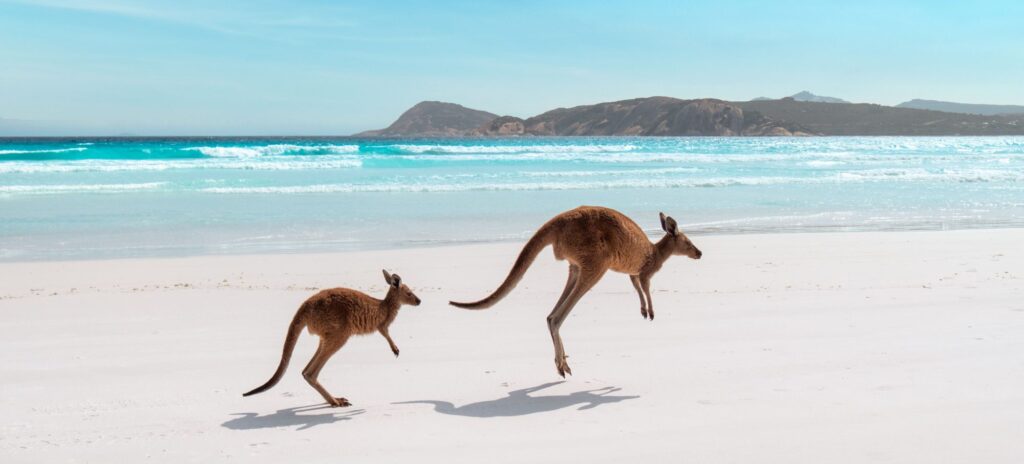
It bounds across our coat of arms, grazes on the edge of country towns and, on one Western Australian beach, even stretches out on the sand. World Kangaroo Day on 24 October celebrates these extraordinary marsupials, and its theme, Revere and Respect, asks us to appreciate them on their own terms. Here are our favourite kangaroo facts, a few easy ways to watch them responsibly and four of the best places to see kangaroos in Australia
Fun facts about kangaroos
Kangaroos have been perfecting life in Australia for millions of years, and the more you learn about them, the more impressive they become. Here are a few facts worth sharing on your next road trip.
1. A joey starts life the size of a jellybean
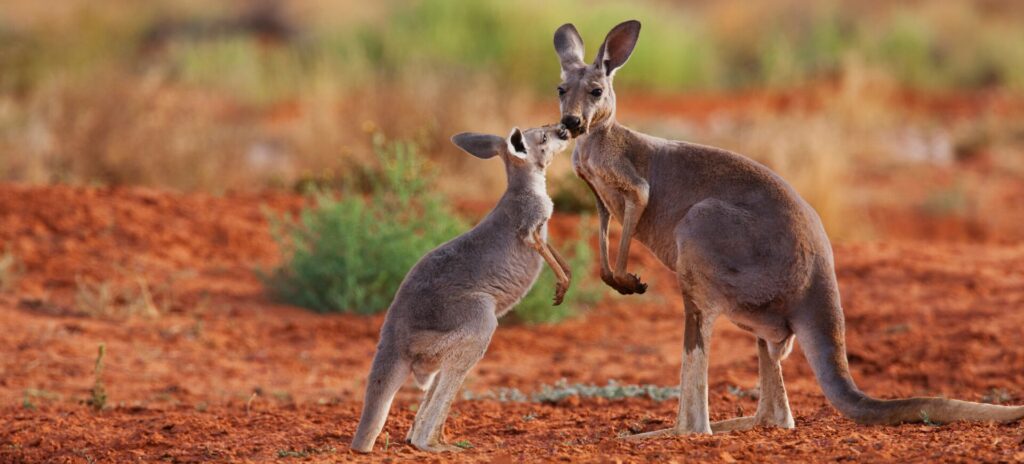
A newborn kangaroo is tiny, hairless and only about the size of a jellybean. Within minutes of birth, it makes its way through its mother’s fur and into the pouch, where it will stay safe and warm for months before it is ready to take its first hops outside.
2. Mums can produce two kinds of milk at once
A female kangaroo can feed a young joey in the pouch and an older joey at foot at the same time, producing a different type of milk from each teat to suit each joey’s stage of growth.
3. They can pause a pregnancy
Female kangaroos can carry an embryo that stays dormant until the pouch is free or conditions improve. Known as embryonic diapause, it is one of the clever ways kangaroos have adapted to life in a land of droughts and flooding rains.
4. Hopping is built for efficiency
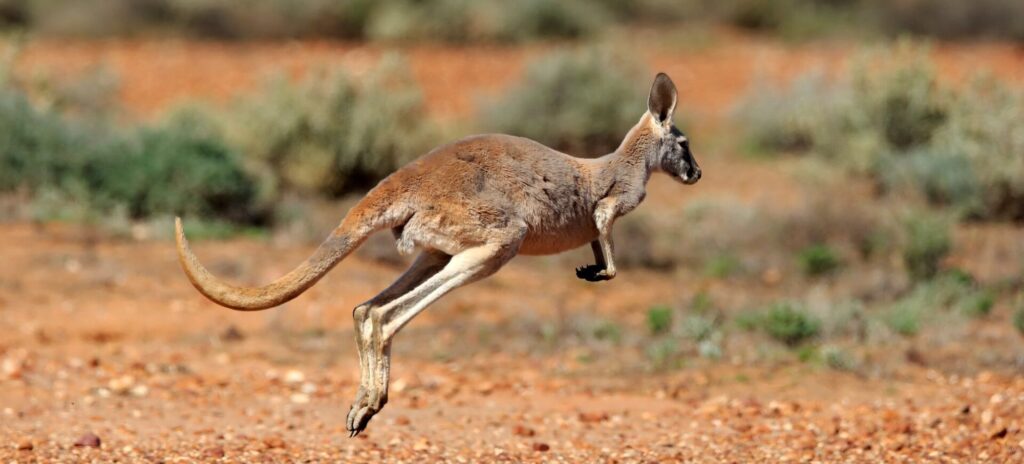
A kangaroo’s powerful hind legs and long tendons work like springs, storing and releasing energy with every bound. It means kangaroos can cover long distances using surprisingly little energy, and a large kangaroo can clear several metres in a single leap.
5. The tail works like a fifth leg
When grazing or moving slowly, kangaroos lean on their muscular tail and swing their back legs forward, using it almost like an extra limb. At speed, the tail helps them balance.
6. Going backwards isn’t their strong suit
With large hind feet and a heavy tail, kangaroos are built to move forwards and rarely, if ever, step backwards.
7. A group is called a mob
Kangaroos often live in groups known as mobs. Males are called bucks, boomers or jacks, females are does, flyers or jills, and the young are, of course, joeys.
8. The red kangaroo is the world’s largest marsupial
Found across Australia’s arid inland, the red kangaroo is the largest living marsupial. A fully grown male can stand taller than many people and weigh up to around 90 kilograms.
9. Dawn and dusk are prime time
Kangaroos tend to rest in the shade through the heat of the day and become more active in the cooler hours of early morning and late afternoon, which is when you’re most likely to see them grazing.
Where to see kangaroos in Australia
Kangaroos live across much of Australia, but some places offer especially memorable encounters. Here are four of our favourites, each visited on an AAT Kings itinerary.
Lucky Bay, Western Australia
Picture a sweep of squeaky white sand, water in every shade of turquoise and a kangaroo stretched out by the shoreline. Lucky Bay, in Cape Le Grand National Park near Esperance, is one of the few places in Australia where kangaroos regularly visit the beach, and seeing them against that coastal backdrop is a highlight for many guests.
On both the Western Wonderland and South Western Escape tours, you’ll explore Cape Le Grand National Park, listen for the Whistling Rock at Thistle Cove and spend time at Lucky Bay before continuing to Hellfire Bay to meet an Aboriginal guide as part of a MAKE TRAVEL MATTER® Experience.
Hunter Valley, New South Wales
Australia’s oldest wine region is known for its semillon and shiraz, but keep your eyes on the paddocks too. Eastern grey kangaroos often graze on the grassy edges of vineyards and open spaces across the Hunter Valley, especially in the early morning and late afternoon.
The Sydney, Hunter Valley & Blue Mountains Escape Short Break pairs wine tastings at Hunter Valley wineries with time at Hunter Valley Gardens, views from Govetts Leap and Echo Point in the Blue Mountains, and a visit to Sydney Zoo, so there are plenty of chances to spot Australian wildlife along the way.
Kangaroo Island, South Australia
With a name like Kangaroo Island, expectations are high, and the island delivers. It’s home to its own subspecies of the western grey kangaroo, known for its darker, thicker coat, and with relatively few introduced predators, wildlife thrives here.
The Remarkable Adelaide to Kangaroo Island tour focuses on the island itself, from Remarkable Rocks and Admirals Arch to local producers. The Great Ocean Road and Kangaroo Island Escape combines the island with Victoria’s coastline and the Coonawarra, while Tastes of Southern Australia journeys from Sydney to Adelaide via Canberra, Melbourne and the Great Ocean Road before crossing to the island.
Alice Springs Desert Park, Northern Territory
Set at the foot of the MacDonnell Ranges, the Alice Springs Desert Park brings Central Australia’s desert habitats together in one place. Walk through recreated river, sand country and woodland environments, where you can see red kangaroos alongside emus, dingoes and native birds, and learn how desert plants and animals have adapted to life in the arid heart of Australia.
On the Outback Adventure tour, which travels from Adelaide to Darwin, you’ll visit the Desert Park with a local Aboriginal guide and learn about the culture and traditions of the Arrernte people, the Traditional Owners of the Alice Springs region.
Revere and Respect: How to watch kangaroos responsibly
This year’s World Kangaroo Day theme, Revere and Respect, is a good guide for any wildlife encounter. A few simple habits help keep kangaroos wild, healthy and relaxed around people.
- Give them space. Watch quietly from a distance and let kangaroos choose how close they come. Never approach a joey or come between a mother and her young.
- Don’t feed them. Human food can make kangaroos sick and encourages them to rely on people. At places like Lucky Bay, enjoy the moment without offering snacks.
- Be still and patient. Sudden movements can startle a mob. The calmer you are, the longer you’re likely to enjoy the view.
- Respect their rest. Kangaroos lounging on a beach or under a tree are often escaping the heat. Let them doze in peace.
- Take photos, leave nothing. Use a zoom lens rather than moving closer, and take all rubbish with you.
Travelling with an experienced Travel Director or Driver Guide makes this easy, as they know where wildlife is likely to be and how to enjoy it without disturbing it.
Celebrate kangaroos on your next Australian holiday
Whether you’re watching kangaroos stroll across a beach in Western Australia, grazing between the vines in the Hunter Valley or bounding through the bush on Kangaroo Island, every encounter is a chance to slow down and appreciate one of Australia’s most remarkable animals. This World Kangaroo Day, and every day after it, a little reverence and respect goes a long way.
Hop into your next Australian adventure
Discover guided holidays that take you from Lucky Bay to Kangaroo Island and the Red Centre.