

Outback New South Wales is where sculpted desert, underground opal history and one of the world’s longest continuous cultures meet. Travel west of the familiar coastal icons and you can connect White Cliffs, Broken Hill, Silverton, Menindee Lakes and Mungo National Park in one story-rich journey.
There is a particular kind of quiet in the outback. It arrives after the road unfurls towards the horizon, the sky seems to double in size and the colours shift from blue-grey saltbush to iron-red earth. Then the details begin to appear: a corrugated-iron pub with a story to tell, sculptures glowing at sunset, and the delicate ridges of an ancient lunette shaped by wind and time.
That contrast is what makes an Outback New South Wales journey so memorable. Rather than one headline sight, the region offers a chain of places that reveal how people have lived, worked and created in a demanding landscape. The new nine-day Outback New South Wales Adventurer Small Group tour brings them together in a return journey from Sydney, with local guides adding context along the way.
Why go beyond the usual Australian icons?
Sydney Harbour, the Great Barrier Reef and the Red Centre may be the images that first come to mind, but the far west tells another essential Australian story. In Broken Hill, mining heritage sits beside a thriving arts scene. In White Cliffs, life moves underground. Around Menindee, a network of lakes interrupts the arid landscape. At Mungo, people have cared for Country across tens of thousands of years.
Distances here are significant, and the most rewarding places are often spread far apart. A guided small group tour takes care of the practical details while creating room for the moments that cannot be scheduled: changing light on the plains, local stories over lunch or the first glimpse of an outback night sky.
Mudgee: savour the flavours of regional New South Wales
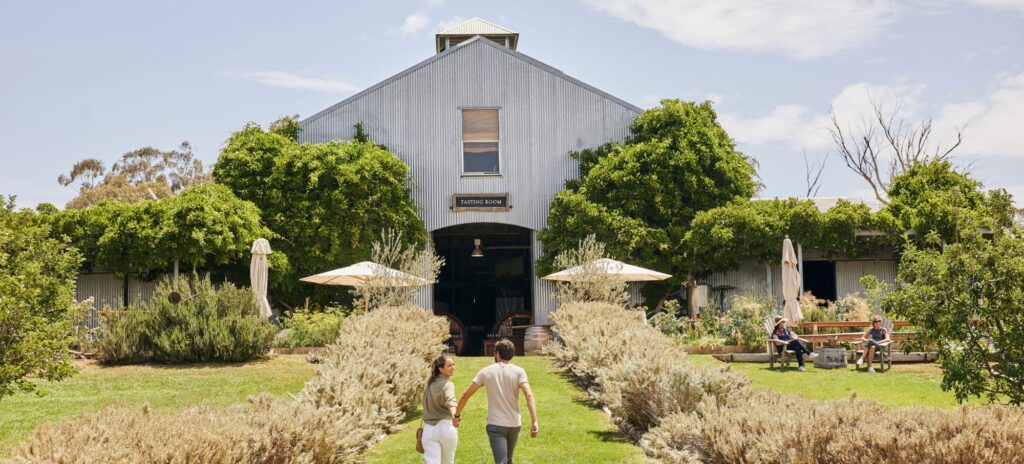
Mudgee is one of New South Wales’ most celebrated food and wine destinations. Winegrowing has been part of the region’s story since 1858, and today its vineyards produce 44 grape varieties. While Mudgee is particularly known for robust Shiraz, Cabernet Sauvignon and Chardonnay, more than 35 cellar doors showcase everything from traditional favourites to fresh Italian-style varieties. Beyond the vines, Mudgee’s heritage streets, welcoming country atmosphere and abundance of local produce make it a rewarding introduction to regional New South Wales.
A highlight of the Outback New South Wales Adventurer is a visit to Lowe Family Wine Co, one of the region’s leading organic wineries. Enjoy a relaxed wine tasting and lunch overlooking the vineyards, with an opportunity to learn more about the people, produce and winemaking traditions behind Mudgee’s flourishing food and wine culture. It offers a different side of regional New South Wales, contrasting with the mining towns, desert plains and ancient landscapes that await farther west.
White Cliffs: go below the surface of opal country
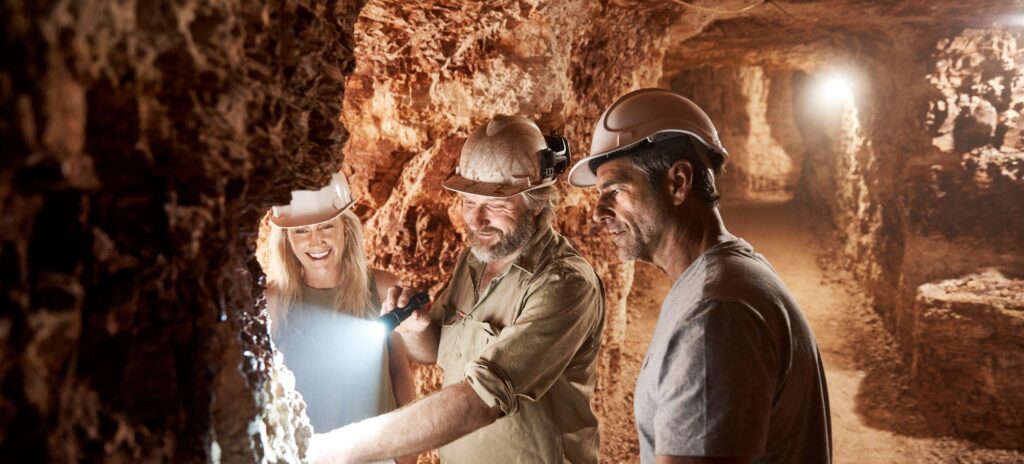
White Cliffs has the surreal quality of a town half-hidden from view. Opal was discovered in the area in the late 19th century, and the settlement that followed had to adapt to searing summer temperatures. Many residents created underground homes, known as dugouts, where the earth provides natural insulation.
On the Outback New South Wales Adventurer, you descend into an historic opal mine approximately 13.5 metres below ground. It is a chance to understand the work behind the flashes of colour seen in an opal, while learning how geology, ingenuity and isolation shaped the community above. Back in the daylight, the mullock heaps and open sky make the subterranean experience feel even more extraordinary.
White Cliffs is also a reminder that the outback is not a museum piece. It is a living town with its own rhythms and resourcefulness. Listening to people who know the place helps transform a curiosity on the map into a community you can picture long after you leave.
Broken Hill: heritage, art and desert landscapes
Broken Hill built its reputation on silver, lead and zinc, but its identity extends well beyond mining. In 2015, it became Australia’s first Heritage Listed City, recognised for its distinctive streetscapes, social history and relationship with the surrounding landscape. Explore its creative side through the works of Pro Hart, visit the miner’s memorial or discover how the Royal Flying Doctor Service supports remote communities.
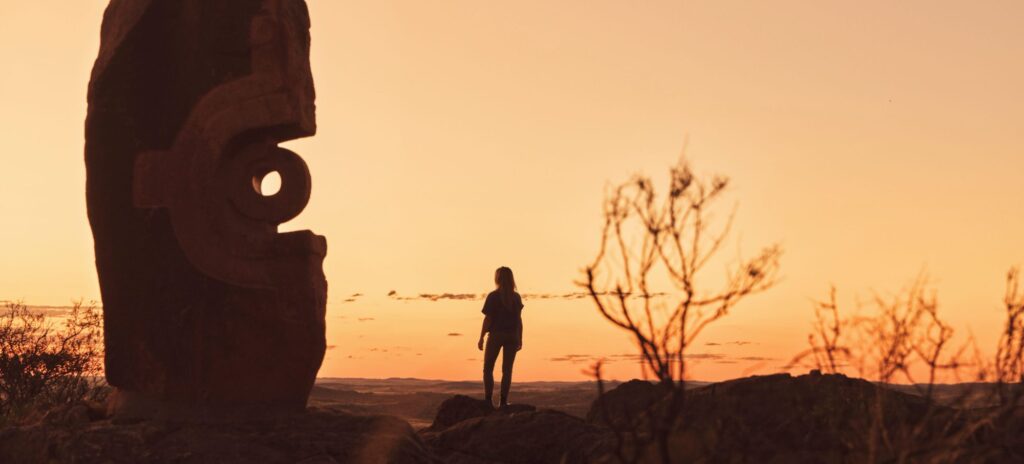
On the outskirts of Broken Hill, the Living Desert State Park brings art and landscape together. Twelve sandstone sculptures created by international artists crown Sundown Hill, overlooking the open plains and distant Barrier Ranges.
Visit in the late afternoon to watch the changing light deepen the shadows across the carvings. Take time to walk among the sculptures and see how each one frames the vast country beyond.
Silverton: cinematic horizons
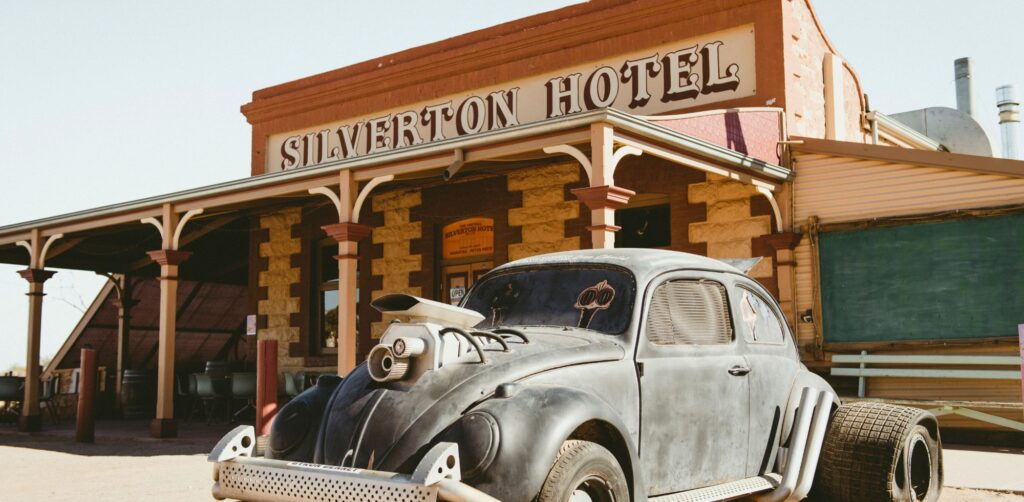
Around 25 kilometres from Broken Hill, Silverton feels instantly familiar, even if it is your first visit. Once a thriving mining settlement, its wide streets, colonial buildings and rugged surroundings preserve the character of its frontier past. The striking landscape has also made Silverton a sought-after filming location, most famously appearing in Mad Max 2.
Today, heritage buildings sit alongside galleries, studios and local landmarks such as the Silverton Hotel, giving the town an energy all its own. This blend of mining history, creativity and cinematic scenery makes Silverton much more than an outback backdrop—it is a memorable destination with stories around every corner.
Menindee Lakes: water in an arid landscape
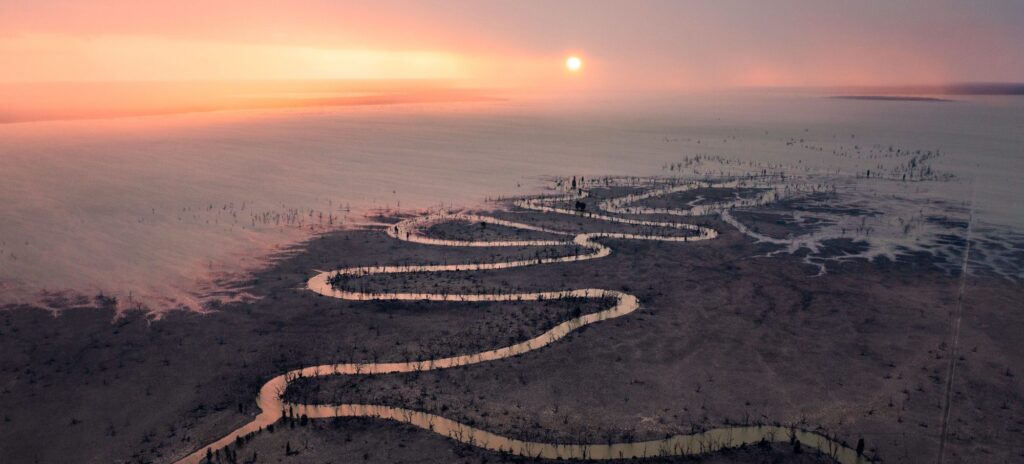
After days of ochre and saltbush, the Menindee Lakes can feel like a mirage. This chain of shallow lakes is part of the Baaka, Darling River system and has long supported wildlife, communities and cultural connection. Water levels naturally vary, so every visit has a different mood.
When conditions allow, river red gums reflect in still water and birdlife gathers along the margins. In drier periods, exposed lakebeds reveal another face of the landscape. A guide can help explain the system’s complexity and why water is central to life throughout western New South Wales.
Nearby Kinchega National Park preserves pastoral history alongside much older cultural stories. The ruins of the Kinchega Homestead and historic woolshed speak to the era of vast sheep stations, while the wider landscape remains deeply significant to Aboriginal people. Seen together, these layers resist a single, simple version of the outback.
Mungo National Park: deep time on Country
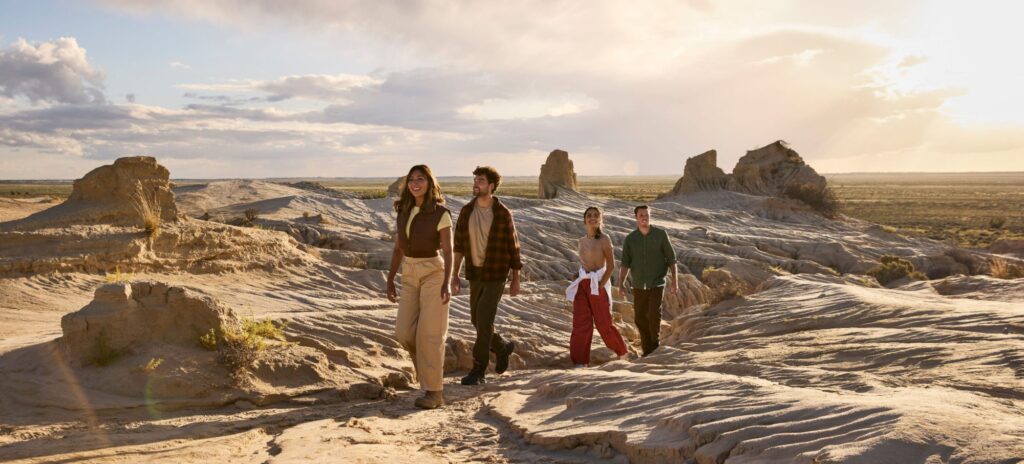
Mungo National Park is part of the UNESCO World Heritage-listed Willandra Lakes Region. Although the lakes have been dry for thousands of years, their ancient shorelines preserve an exceptional record of environmental change and Aboriginal life spanning more than 40,000 years.
The park is home to the Ngyiampaa, Mutthi Mutthi and Southern Paakantyi peoples. Travelling with an Aboriginal guide is the best way to learn about the landscape and culture.
The best-known formation is the Walls of China, part of a crescent-shaped dune called a lunette. Wind and water have sculpted layers of sand and clay into fragile pinnacles and folds. On a Mungo lunette guided tour, the landscape becomes a readable archive: footprints, hearths, artefacts and sediments connect human stories with a changing climate.
Mungo is not simply a photogenic stop; it is a place to listen, learn and leave with greater respect for the world’s oldest continuing living cultures.
When is the best time to visit outback NSW?
Autumn and spring are generally the most comfortable seasons for an Outback NSW tour, with milder daytime temperatures and cooler evenings. Expect cooler nights during winter and warmer temperatures in summer, particularly in desert regions.
Conditions vary across such a large region. Check the forecast close to departure and pack flexible layers, sun protection, a refillable water bottle and sturdy enclosed shoes. If Mungo is on your route, remember that rain can affect unsealed road access. A guided itinerary is valuable here because the team can monitor local conditions and adjust logistics where needed.
Why choose a small group outback tour?
Small group travel suits a region built on local encounters. It makes it easier to hear a guide underground in White Cliffs, ask questions at a community stop and share a sunset viewpoint without feeling rushed. It also opens access to intimate dining and specialist experiences that can be difficult to organise independently.
AAT Kings’ Small Group journeys average 16 guests and pair curated inclusions with unique stays. On the Outback New South Wales Adventurer, the route, accommodation and many meals are arranged, while a expert Travel Director connects the landscapes, people and histories between each stop.
That means less time studying fuel stops and road conditions, and more time looking out the window. Explore the Outback New South Wales Adventurer or browse AAT Kings holiday options to find a journey that fits your travel style.
Frequently asked questions
How many days do you need for outback New South Wales?
Allow at least a week for a route linking White Cliffs, Broken Hill and Mungo National Park. The nine-day Outback New South Wales Adventurer travels from Sydney and builds in time for major experiences without treating the outback as a drive-through destination.
Can you visit Mungo National Park without a tour?
You can visit parts of the park independently when roads are open, but access to the fragile Mungo lunette is restricted to approved guided experiences. A guided visit also provides essential cultural, archaeological and environmental context.
Is Broken Hill worth visiting?
Yes. Broken Hill combines nationally significant mining and social heritage with galleries, desert landscapes and easy access to Silverton and the Living Desert sculptures. It is one of the best bases for understanding far western New South Wales.
What should I pack for an outback NSW trip?
Pack light, breathable clothing, warm layers for evenings, a broad-brimmed hat, sunglasses, sunscreen, sturdy enclosed shoes and a reusable water bottle. Include any medication in your hand luggage and check your final tour documents for luggage limits.
Is this journey suitable for first-time outback travellers?
Yes. A guided small group tour is an easy way to experience the distances and changing conditions of the outback with transport, accommodation and key experiences organised. Review the itinerary’s fitness and mobility guidance before booking.
Ready to explore more of New South Wales?
Discover the places, stories and landscapes that make the state unforgettable.