
From the Top End to the Red Centre and along the remote coastlines, wildlife shapes every experience of travelling in the Northern Territory. Crocodiles glide through still billabongs; wallabies graze in the soft light of late afternoon and powerful birds of prey circle high above ancient rock formations. Along quiet beaches, turtles return to nest as they have for generations. These moments are not staged or rushed. They unfold naturally, adding depth and meaning to every journey through the Territory.
Wildlife here is part of the rhythm of the landscape. It appears when conditions are right, when the light shifts, when the air cools. Seeing these animals in their natural habitats offers more than a photo opportunity. It offers perspective.
Feel the Northern Territory for real. Different in every sense.
This isn’t just a place you visit. It’s a place you feel.
The Saltwater Crocodile
Meet the Territory’s Ancient Apex Predator
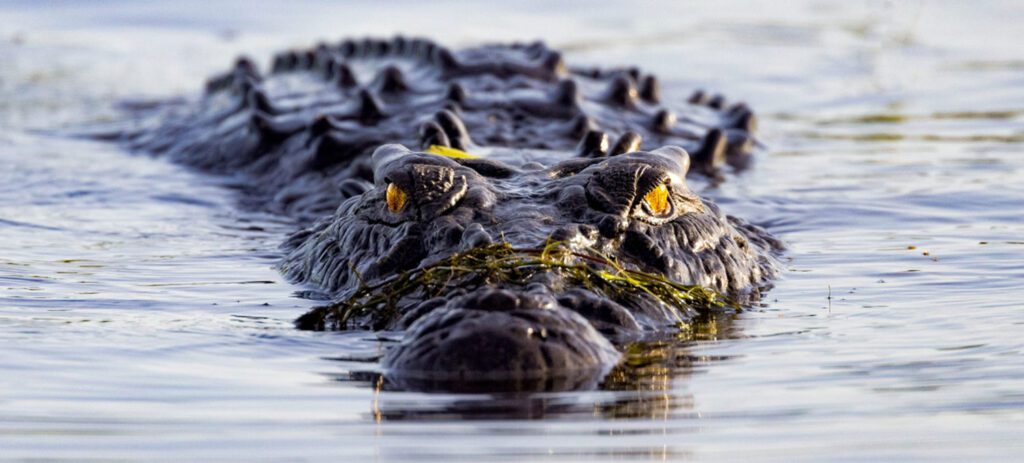
The saltwater crocodile is one of the Northern Territory’s most recognisable and respected residents. Found throughout the Top End in places such as Kakadu National Park, the Mary River and the Adelaide River, these powerful reptiles can grow more than six metres long. As the largest living reptiles in the world, they have inhabited northern Australia’s waterways for millions of years.
Seeing a crocodile in its natural habitat is a defining Territory experience. Whether resting along muddy riverbanks or gliding silently through the water, their presence commands attention. Guided cruises on Yellow Water Billabong in Kakadu provide a safe and informative way to observe crocodiles alongside abundant birdlife and wetland scenery, while jumping crocodile experiences on the Adelaide River showcase their strength and agility under expert supervision.
Fun fact: Saltwater crocodiles have one of the strongest recorded bite forces of any animal on Earth, a reminder of why they sit firmly at the top of the food chain.
Spot the saltwater crocodile: Explore the Top End
The Black-footed Rock Wallaby
Among the Rocks of the Red Centre
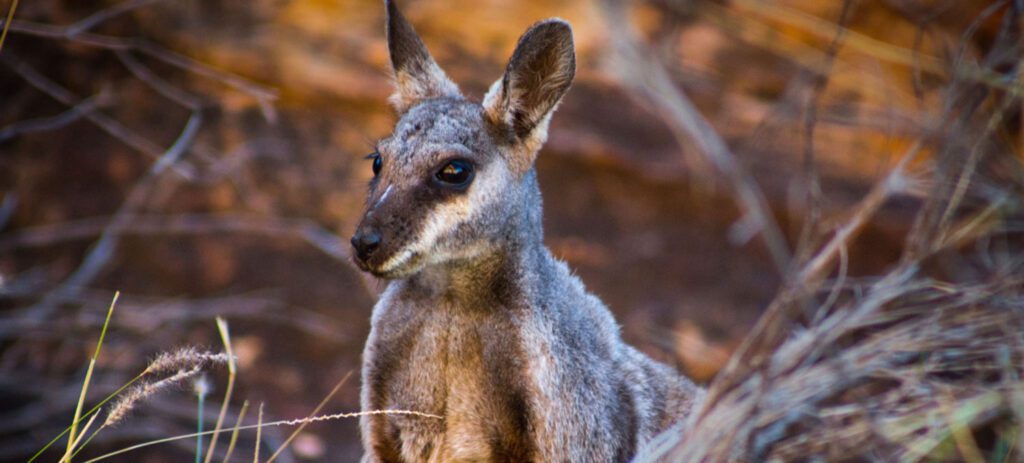
The black-footed rock wallaby is one of the Northern Territory’s quieter wildlife residents, found among the rugged escarpments and rocky outcrops of Central Australia. Smaller than many kangaroo species, these agile wallabies are specially adapted to life in steep, uneven terrain, where cliffs and boulder fields provide shelter and protection.
With strong hind legs and long tails for balance, rock wallabies move confidently across narrow ledges and scattered rock formations. They are most active during the cooler parts of the day, often retreating into shaded crevices as temperatures rise. While travelling through the Red Centre on an AAT Kings tour, particularly around Kings Canyon and the West MacDonnell Ranges, guests may be fortunate enough to spot one resting among the rocks or bounding across the landscape. These sightings feel authentic and unhurried, adding another layer to the experience of exploring this ancient terrain.
Fun fact: The black-footed rock wallaby can leap between steep rock faces with remarkable precision, using its thick tail to help maintain balance.
Spot the black-footed rock wallaby: Discover the Red Centre
The Jaibiru (Black-necked Stork)
Birdlife of Kakadu’s Wetlands
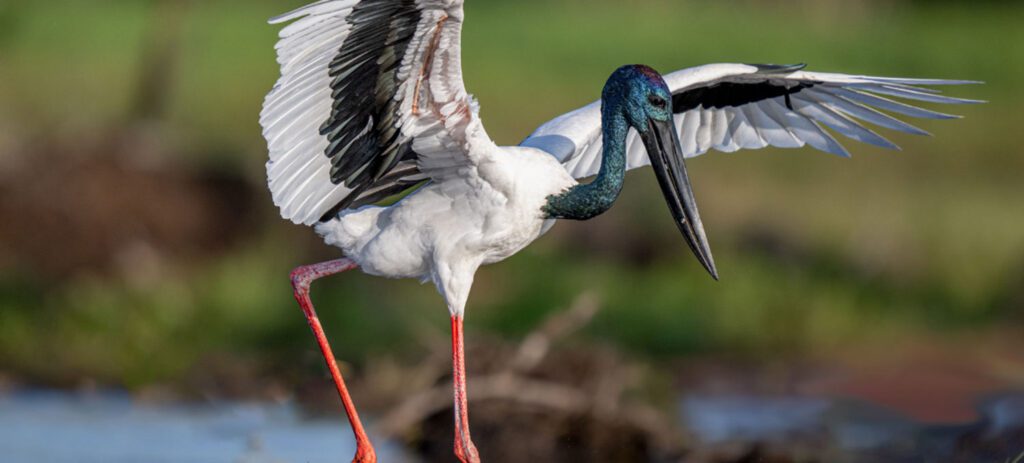
Tall, elegant and instantly recognisable, the jabiru stands out across Kakadu’s floodplains. Its striking black-and-white body and iridescent neck shimmer in the sunlight, and it ranks among Australia’s tallest flying birds.
Kakadu is home to more than 280 recorded bird species, supported by seasonal floodplains, billabongs and paperbark swamps. Spotting a jabiru wading through shallow water or lifting into flight across a wide wetland is often a highlight for guests exploring the region.
Fun fact: Despite their size, jabirus are strong fliers and can travel long distances between wetlands in search of food as water levels change through the seasons.
Birdwatch the jabiru: Explore Kakadu tours
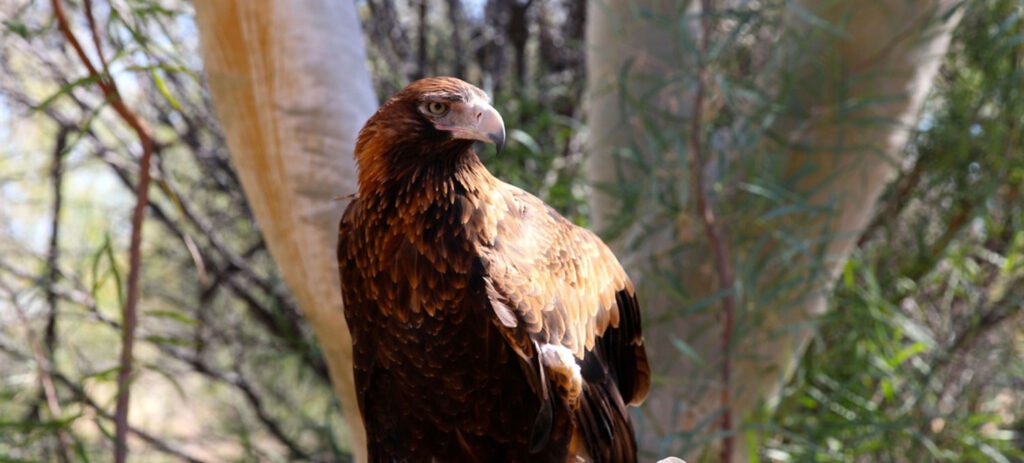
The Wedge-tailed Eagle
Soaring Above the Outback
With a wingspan that can reach up to 2.8 metres, the wedge-tailed eagle is Australia’s largest bird of prey. These powerful raptors are frequently seen in open outback landscapes near Kings Canyon and Uluru, where rising thermal currents help them glide effortlessly across vast distances.
Watching a wedge-tailed eagle circle high above cliffs and plains reinforces the scale and openness of the Red Centre. Their sharp eyesight allows them to detect movement from remarkable heights.
Fun fact: Wedge-tailed eagles build some of the largest bird nests in Australia, often reusing and adding to them year after year so they can grow to several metres wide.
Spot the wedge-tailed eagle: Red Centre tours
Flatback Turtle
Coastal Wildlife of the Northern Territory
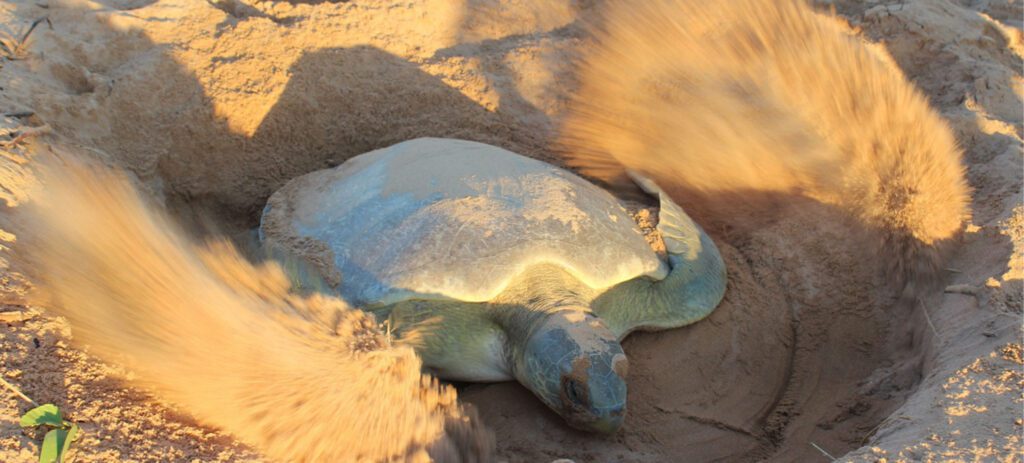
While the Northern Territory is often associated with desert and wetlands, its remote coastline supports significant marine life. The flatback turtle, a species found only in Australian waters, nests along quiet northern beaches and remains largely within the continental shelf rather than migrating across oceans.
During nesting season, females return to shore to lay their eggs, continuing a cycle that has taken place for generations. These beaches are carefully managed to protect fragile habitats and support conservation efforts.
Fun fact: Flatback turtles are named for their relatively flat shells, which help distinguish them from other sea turtle species found around Australia.
Discover the flatback turtle at Howard Springs Nature Park: Darwin City Sights tours